
Last updated November 15, 2026
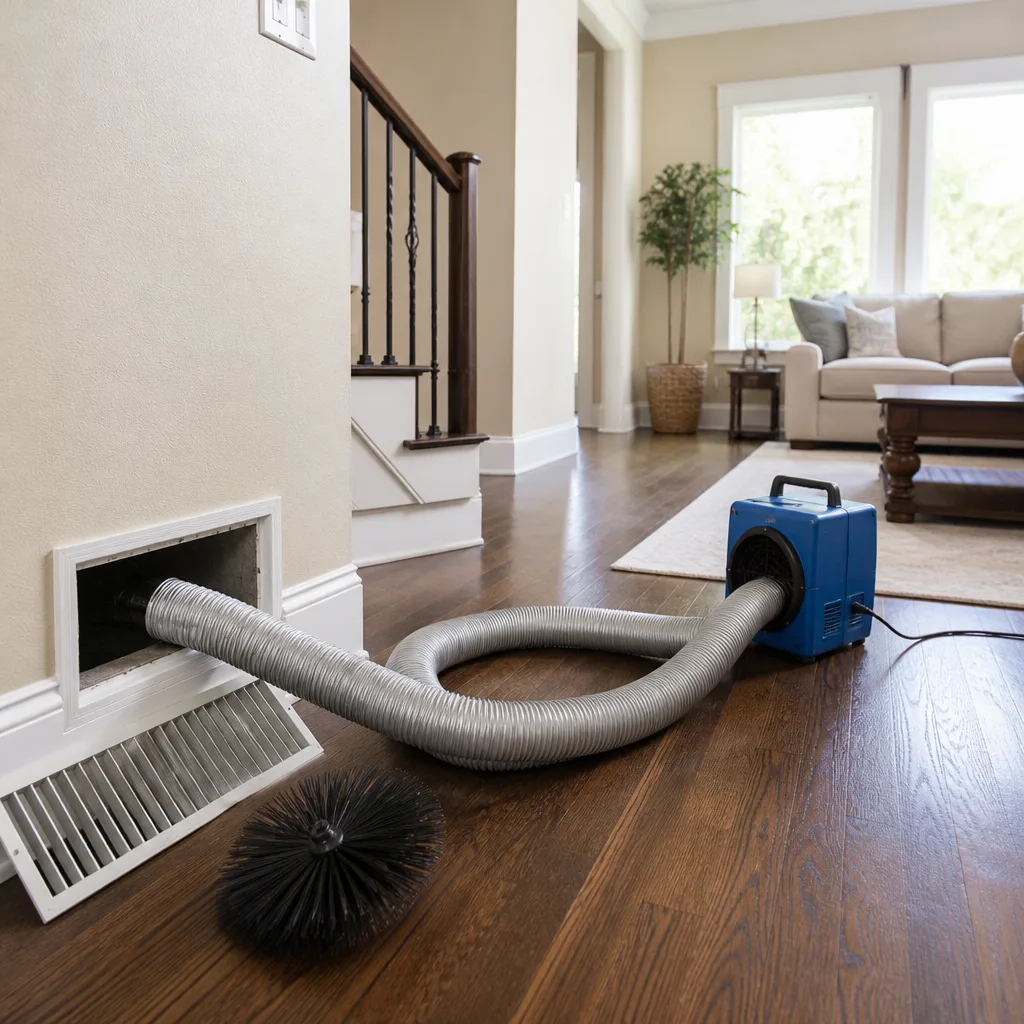 Whole-home duct cleaning
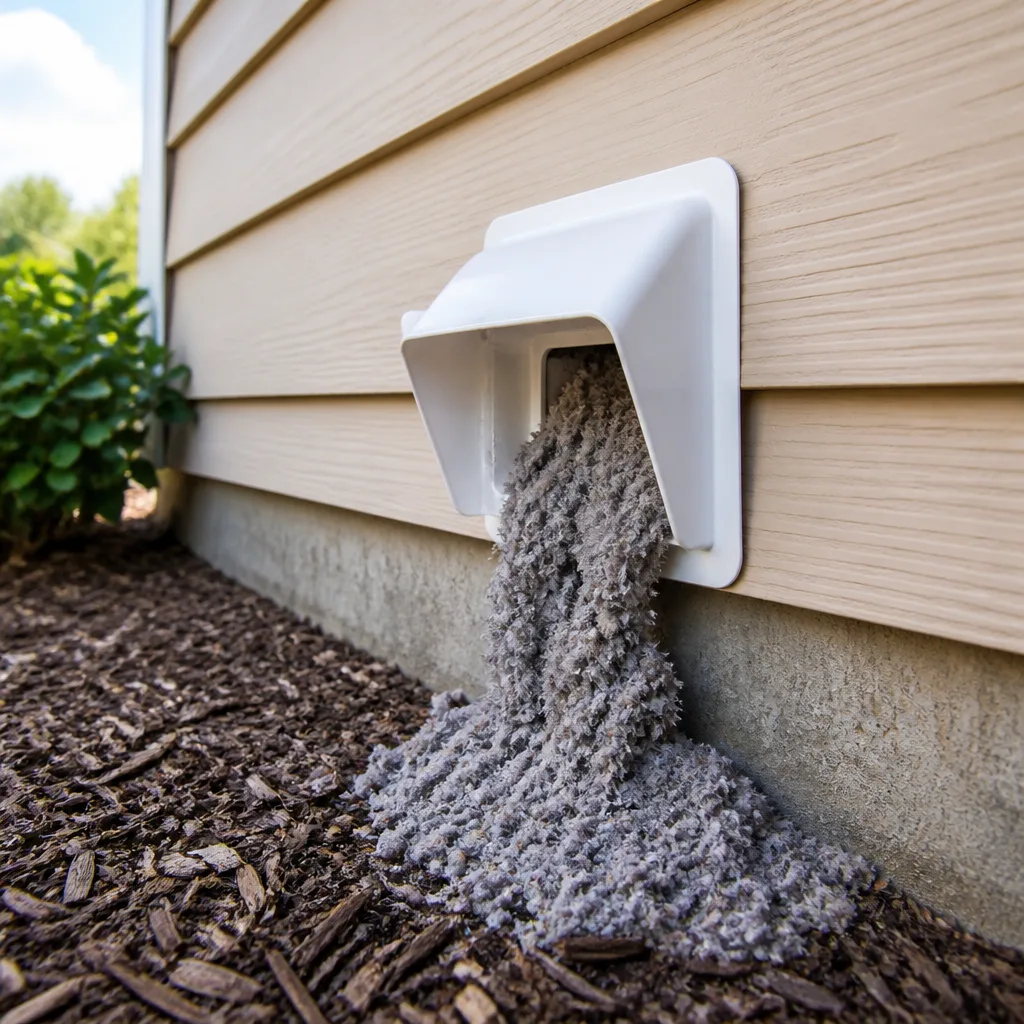 Dryer vent cleaning
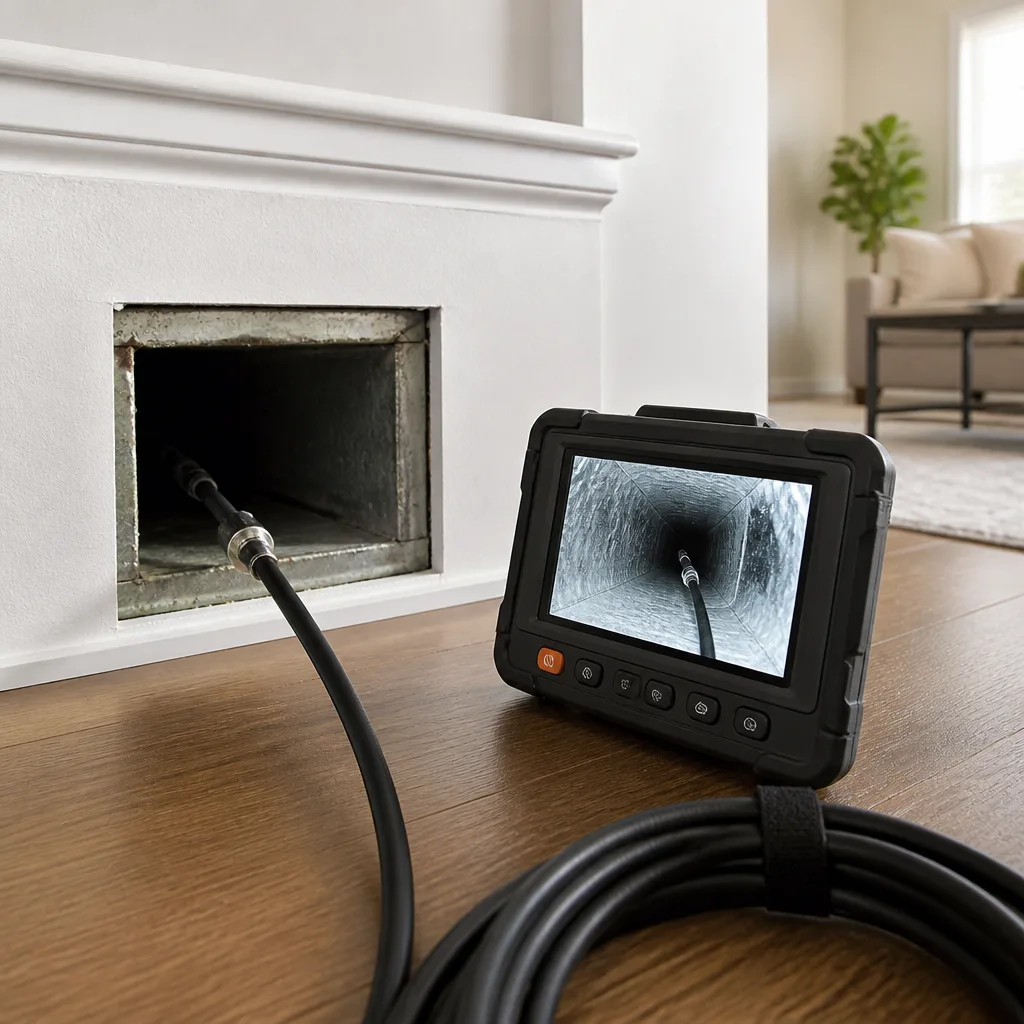 Camera inspection
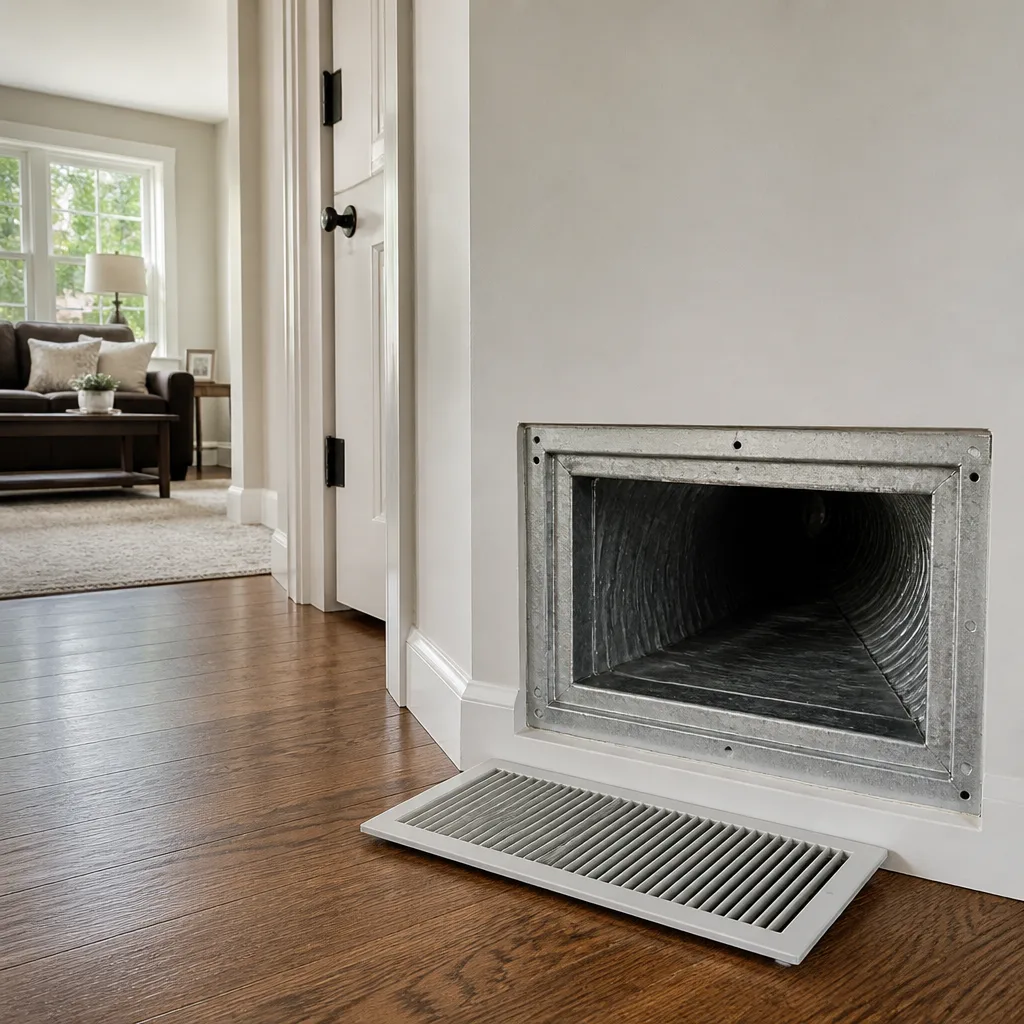 Sanitizing & deodorizing
Whole-system duct and dryer vent check with before-and-after photos - you see exactly what came out of your vents
That "$99 whole-house special" is a bait ad - the real number appears once they are in your hallway, or the "clean" is a shop-vac at the register. We photograph the inside of your ducts before and after instead.
Air Duct Cleaning Maintenance Checklist for Vallejo Homeowners
The dirtiest duct systems we see aren’t the neglected ones. They belong to homeowners who changed the filter religiously, on schedule, every single month, and never once looked at what was happening downstream of it. The filter catches what it catches; everything past it keeps collecting dust, and the first sign of trouble is usually a room that stopped heating evenly or a smell that shows up every fall. This checklist is built so you can monitor your own system between professional cleanings and catch problems while they’re still cheap. Here’s what to check, how often, and what the results tell you about the air in your Vallejo home.
Quick Answer
A working duct maintenance routine has four parts: a monthly visual check at the registers, filter changes sized to your system and your household, a room-by-room airflow test every season, and a written log of what you find. Most Vallejo homes need a professional duct cleaning every three to five years, or sooner after major renovation work or if you notice visible debris, pest activity, or a persistent musty smell coming from the vents.
Styles & brands we work with
- Whole-home duct cleaning
- Dryer vent cleaning
- Camera inspection
- Sanitizing & deodorizing
Table of Contents
- Monthly Register Inspection: What to Look For and Photograph
- Choosing the Right Filter for Vallejo Conditions
- The Tissue-Paper Airflow Test, Room by Room
- A Vallejo Seasonal Calendar, Not a Generic One
- Building a Service Log That Protects Your Home’s Value
- Dryer Vent: The Separate System Nobody Checks
- Common Mistakes to Avoid
- When to Call a Professional
Monthly Register Inspection: What to Look For and Photograph
Fifteen minutes a month with a flashlight and your phone camera is the single highest-value habit in this guide. You’re not cleaning anything during this check. You’re building a record of what normal looks like in your home, so that when something changes you actually notice it.
Pick a day that repeats predictably and work through every supply and return register in the house. At each one, do the same four things in the same order:
- Look at the grille face. A thin, even film of household dust is normal. Fuzzy gray buildup, dark streaking radiating out from the slats, or a visible ring of grime around the perimeter is telling you debris is being pushed out, not just settling on the surface.
- Shine the flashlight into the boot. That’s the short section of duct behind the register. You’re looking for loose dust clumps, flakes of lining material, or anything that looks like it didn’t come from your house.
- Photograph the register with the grille on, then off. Take the photo from the same spot each month. Side-by-side comparison over time is far more reliable than memory.
- Note the smell. Write one word in your log. “Nothing,” “dusty,” “musty,” “chemical.” A smell that persists across two months is worth investigating; a smell that appears after rain and disappears is usually humidity-related and less urgent.
Two things are worth an immediate call rather than a log entry: any sign of rodent droppings or nesting material in a register boot, and any visible moisture or staining on the duct interior. Vallejo’s wet months put real stress on duct systems in older homes, especially where flex duct runs through unconditioned attic or crawl spaces. Water where it shouldn’t be is a problem that gets more expensive the longer it sits.
- Photograph and keep: the register face with the grille on, the duct interior behind the grille, and a dated note of the room.
- Do not: reach into the duct beyond the boot, spray anything into the duct, or attempt to remove a register you can’t easily reinstall.
- Flag immediately: droppings, nesting material, standing moisture, torn or collapsed flex duct, or a register that won’t stay seated.
If your inspection turns up visible debris in more than two or three rooms, that’s usually a sign the whole system is due rather than one branch. That’s when it’s worth having a professional look at air duct cleaning before the problem spreads through the rest of the house.
Choosing the Right Filter for Vallejo Conditions
Filter selection is where most homeowners accidentally create a problem while trying to solve one. A higher MERV rating captures more particles, but it also restricts airflow, and older duct systems in Vallejo were often sized with a much lower pressure drop in mind than a modern high-capture filter delivers. Push the rating too high on an undersized return, and the system compensates by pulling air through every gap and joint it can find. You get a cleaner filter and dirtier ducts.
Here’s how to think about the trade-off:
- MERV 8 to MERV 11 is the practical range for most homes in Vallejo. It captures a meaningful share of pollen, dust, and larger particulate without choking airflow in a system with typical residential duct sizing.
- MERV 13 and above is worth considering only if your system was designed for it or you have a specific air quality concern your doctor has flagged. On a system with a single undersized return, a MERV 13 filter can noticeably reduce airflow to second-floor rooms.
- Thin, flimsy 1-inch filters are cheap for a reason. They load up fast and start restricting flow within weeks. A deeper filter media cabinet, if your system has one, holds a higher rating with a lower pressure drop.
- Washable filters are acceptable if you actually wash them on schedule. Most people don’t.
Households with pets, anyone sensitive to pollen, and homes near busy corridors often do better on the higher end of the MERV 8 to 11 range during allergy-heavy months. Homes with a single return and long duct runs are usually better served by staying at the lower end and changing more often. The right answer depends on your system, not on a number on a box.
This is also where the brand ecosystem matters. Familiarity with Honeywell and Aprilaire filtration products helps because those are two of the most common media cabinet and air cleaner systems you’ll find in residential installations, and knowing how they’re specified makes filter selection a decision rather than a guess. Whatever filter you choose, write the MERV rating and the change date on the filter edge in marker. When you pull it out in three months, the date will tell you more about your house than the color will.
The Tissue-Paper Airflow Test, Room by Room
You can map your entire system’s balance in about twenty minutes using nothing but a square of tissue paper. This is the earliest and cheapest indicator of duct leakage, blockage, or a damper that’s drifted out of position, and most homeowners never do it.
Run the system on fan-only. At each supply register, hold the tissue flat against the grille face. Then repeat at every return.
- Strong pull or flutter at every supply: the system is balanced and delivering air roughly where it should. Note it and move on.
- Weak flutter or no movement at one supply: that branch is restricted. Could be a closed damper, a collapsed section of flex duct, or a boot that’s come loose from the main trunk.
- Strong at some registers, nothing at others: the system is unbalanced. Air is finding the path of least resistance, usually through leaky joints in an attic run, rather than reaching the far end of the house.
- Tissue gets pulled toward a supply instead of held away: that register is acting as a return. Something is wrong upstream, and it’s worth a professional inspection.
- Weak everywhere: either the filter is loaded, the blower is struggling, or the return side is undersized for the filter you installed. Check the filter first, then retest.
Record the result for each room in your log with a simple three-tier rating: strong, weak, or none. Do the test once in summer and once in winter. A room that reads strong in one season and weak in the other is usually a damper or a balance issue rather than a blockage, and that distinction saves a lot of diagnostic time later.
In older Vallejo homes with ducts running through hot attics and cool crawl spaces, the airflow test also flags the runs most likely to be leaking. A long attic run that reads weak while a nearby short run reads strong is a classic sign of disconnected or crushed flex duct. If you consistently find weak airflow in the same rooms, our Vallejo service notes on airflow complaints can help you decide what to check next.
The test won’t tell you whether the ducts are dirty. What it tells you is whether the system is delivering air the way it was designed to. Those are different questions, and both matter.
A Vallejo Seasonal Calendar, Not a Generic One
Generic duct maintenance advice says “check in spring and fall.” That doesn’t match how air quality actually moves through this part of the Bay Area. Vallejo’s year has three distinct pressures on a duct system, and the right task depends on which one you’re in.
Fire season (roughly late spring through early fall)
Smoke events are the dominant air quality story of the summer here. When smoke is in the air, the priority shifts from cleaning to sealing the envelope. Keep windows and doors closed during smoke events, run the system on recirculate if your thermostat supports it, and switch to the higher end of your filter’s range if you’ve been running the lower end. A filter that’s a month past its change date during a smoke event is doing very little. After the smoke season ends, check the filter, photograph the registers, and note whether you saw any ash or fine particulate in the boots. A higher-capture filter media cabinet, which is where brands like Aprilaire come into play, gives you a better tool for these weeks than a thin 1-inch filter ever will.
Rainy season (roughly late fall through early spring)
Moisture is the concern now. Duct lining that’s been dry all summer is suddenly in a humid environment, and any gap in the system becomes a path for damp air into the house. Run the register inspection monthly through this stretch and pay particular attention to smells. A musty odor that appears only in the wet months and fades when things dry out usually points to moisture getting into the duct system or the space it runs through. If you find moisture or staining, don’t wait for the dry season to act on it.
Marine layer months
When the fog rolls in and the house stays cool and closed up for long stretches, indoor humidity climbs and dust that was dry becomes slightly damp dust, which clings and compacts. This is when you’re most likely to see visible dust on the register faces even though nothing changed about your cleaning routine. It’s also a good window for the airflow test, because a closed-up house runs the system more consistently and the room-by-room results are more comparable.
- Fire season: higher filter vigilance, monthly register photos, post-season debris check.
- Rainy season: monthly smell log, moisture check at every register, prompt action on any staining.
- Marine layer months: full room-by-room airflow test, register face cleaning, service log update.
If you’re a property manager tracking multiple units around Vallejo, this calendar translates to three scheduled check-ins per year rather than a single annual one, and it catches more problems before tenants call.
Building a Service Log That Protects Your Home’s Value
Most homeowners track their duct maintenance in their head. A written log is a different thing entirely. It’s the difference between “we’ve had the ducts cleaned, I think maybe two years ago?” and a dated record that a buyer, an inspector, or a future technician can actually use.
A useful service log has five columns. Keep it in a notebook, a spreadsheet, or a shared note on your phone. What matters is that it lives somewhere you’ll actually go back to.
- Date. Every entry, even the ones where nothing happened.
- Task performed. Filter change (with MERV rating noted), register inspection, airflow test, professional cleaning, duct repair.
- Observation. One or two sentences. “Second-floor hall register weak on tissue test” is a useful observation. “Looked fine” is not.
- Photo reference. The date of the photos you took, so you can find them later. A dated folder on your phone is enough.
- Who did the work. Name of any professional service that performed a cleaning or repair.
Why does this matter when you’re not planning to sell? Because duct problems develop slowly. A weak airflow reading you logged in March is diagnostic gold if the same register reads nothing in October. And when you do sell, a documented maintenance history signals a well-kept home in a market where buyers are increasingly asking about air quality. It’s a low-cost habit that quietly protects the property.
Do log the small stuff. Recording a filter change with the MERV rating and date lets you spot a pattern, like a filter that’s consistently loaded solid at eight weeks rather than twelve, which tells you the household generates more airborne particulate than average. That’s information you can act on with a different filter spec rather than just changing filters more often.
Dryer Vent: The Separate System Nobody Checks
Air duct cleaning and dryer vent cleaning are two different jobs on two different systems, and most homeowners only remember the first one. The dryer vent is the higher-stakes of the two because lint buildup in a vent line is a fire risk, not just an efficiency problem. Lint is highly combustible, and every load of laundry adds to what’s already collected in the run.
The monthly check takes a minute at most:
- Feel the outside vent flap while the dryer is running. It should swing open freely with noticeable airflow. A flap that barely moves, or lint visible around the opening, means the run is restricted.
- Look behind the dryer. A crushed or kinked flexible connector is a common restriction point and also a lint trap. It’s a cheap fix that most people never look at.
- Track drying time. If a load that used to take 40 minutes is now taking 60, that’s the vent telling you it needs attention.
- Note any heat on the dryer cabinet or a burning smell. Stop using the dryer and have the vent checked before your next load.
Drying time creeping up is the most common early sign we hear about, and it’s the one most often written off as “the dryer is getting old.” A restrictive vent adds stress to the entire appliance. If drying times are climbing and the vent feels restricted, our dryer vent cleaning service handles the vent line as a dedicated job. It’s not something a general duct cleaning will catch unless it’s specifically asked for.
Clean the lint screen before every load. That’s not duct maintenance, that’s just basics, and it doesn’t replace having the full vent line cleaned when it’s restricted.
Common Mistakes to Avoid
- Changing the filter and calling it done. A fresh filter cleans the air passing through it and nothing downstream. The register inspection and airflow test are what tell you about the rest of the system.
- Installing the highest MERV filter the store sells. A MERV 16 filter on a system with an undersized return creates more pressure problems than it solves. Match the filter to the system, not to the marketing on the box.
- Spraying air freshener or essential oils into a register to mask a smell. That doesn’t fix the smell; it adds a new layer to whatever’s producing it. A musty smell is telling you something is wet. Find the source.
- Assuming the dryer vent is fine because the dryer still runs. The dryer running is not proof the vent is clear. Feel the outside flap. Track the drying times. The vent can be significantly restricted and the dryer will still spin.
- Skipping the airflow test because everything “seems fine.” A room that’s slightly weak on the tissue test is the earliest possible signal of a problem. Catching it then costs far less than catching it after a long run of flex duct collapses.
- Hiring on price alone. A duct cleaning offer that’s dramatically lower than every other quote is a different product, not a better deal. Ask what equipment will be used and whether the technician will show you before-and-after photos of your own ducts.
- Never writing anything down. Without a log, every maintenance decision becomes a guess. The log is what turns the rest of this checklist into something useful.
When to Call a Professional
Most of this checklist is designed so you don’t need to call anyone on a routine basis. The exceptions are specific. Call a professional if you find rodent droppings or nesting material in any register, visible moisture or staining inside the duct, or torn or collapsed flex duct. Call if your airflow test shows weak or absent airflow in the same rooms across two seasons, which usually indicates a blockage or disconnection the system can’t fix itself. Call if a musty smell persists across two months or appears in multiple rooms. Call if the dryer vent flap feels restricted and the connector behind the dryer looks crushed. And call if it’s simply been more than three to five years since the system was professionally cleaned, or sooner if you’ve done major renovation work.
Duct Cleaning Vallejo offers free estimates in Vallejo. Call (844) 859-6986. We answer 24/7. Fast dispatch from 7am to 7pm, Sunday through Friday.
See the difference
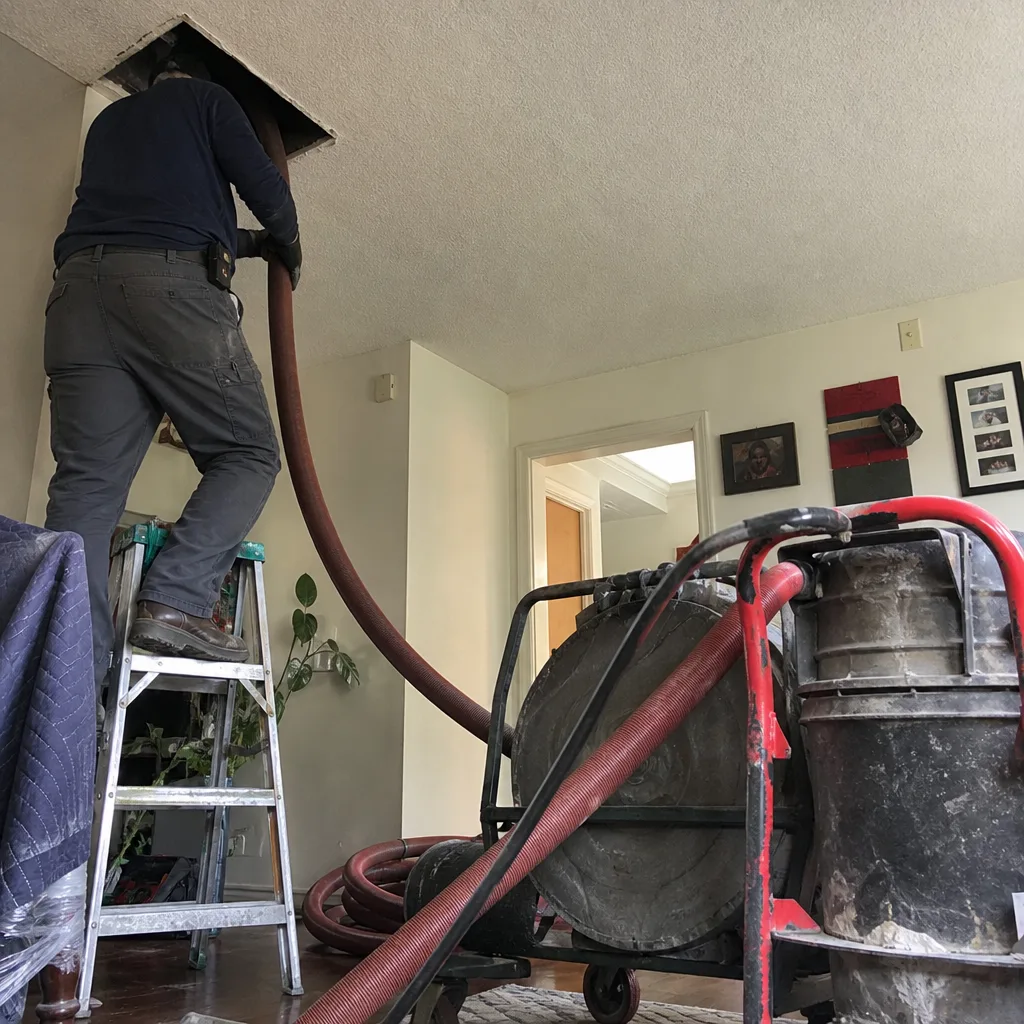 Before
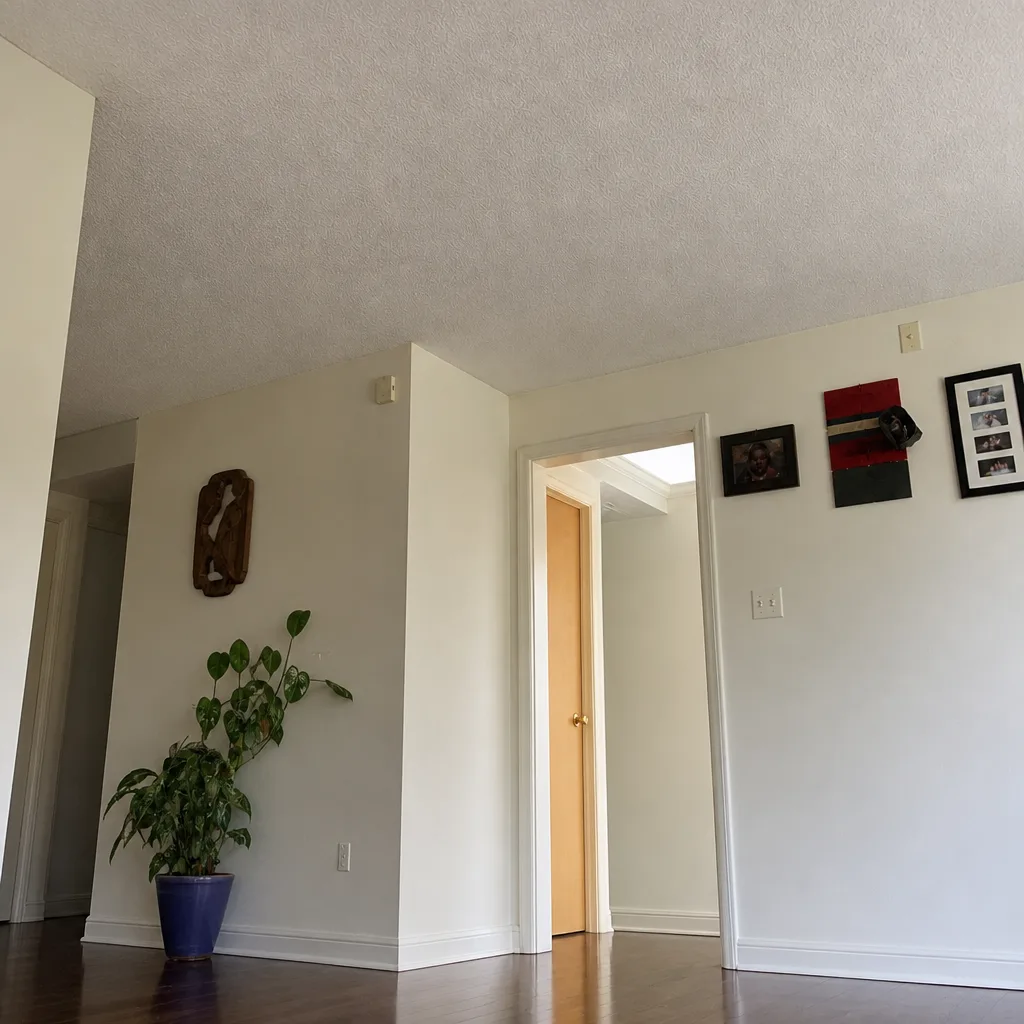 After
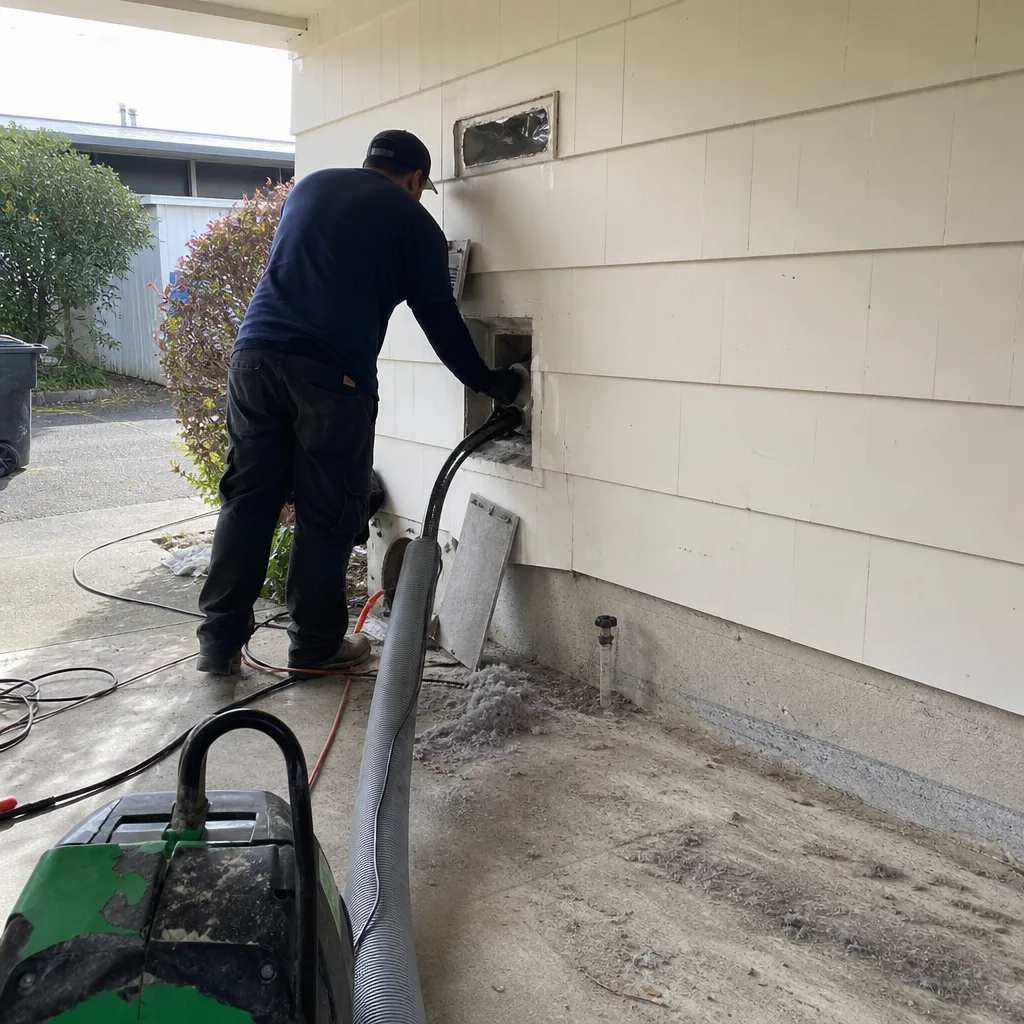 Before
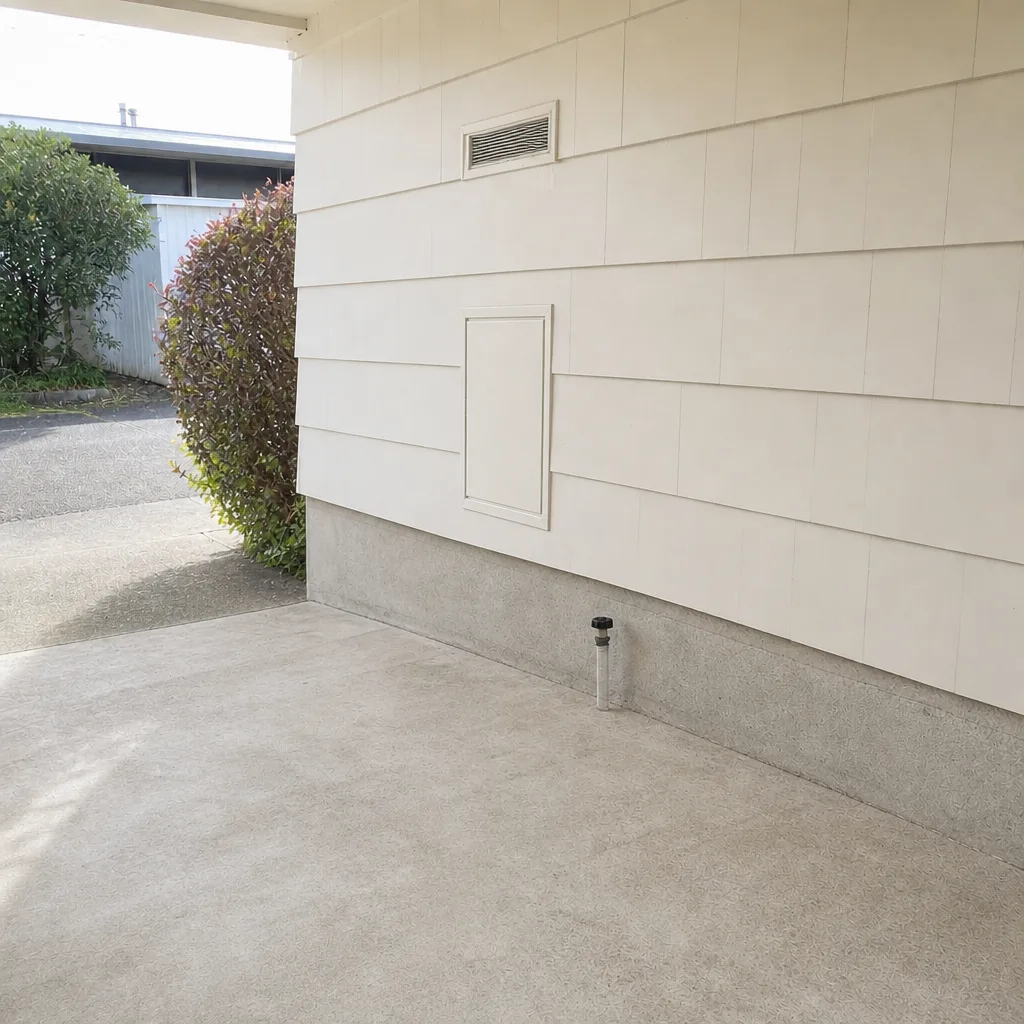 After
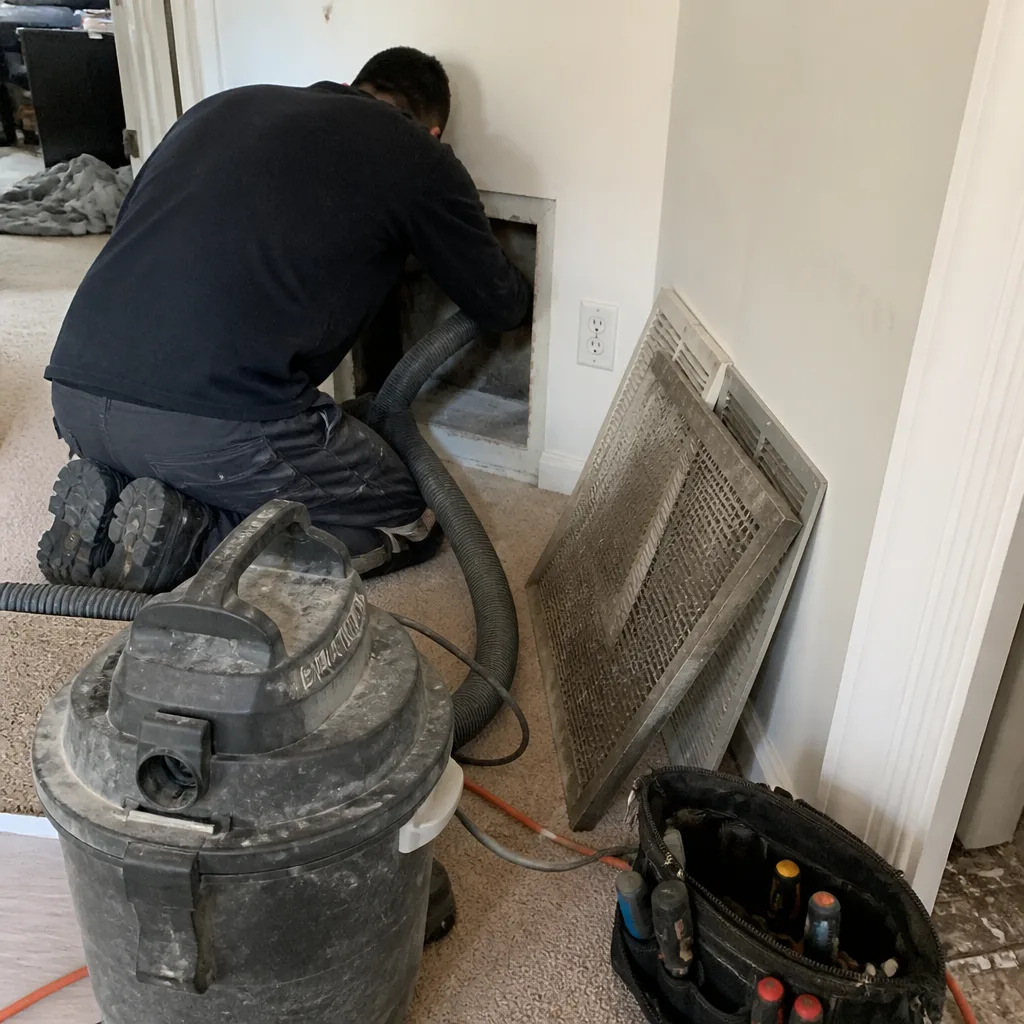 Before
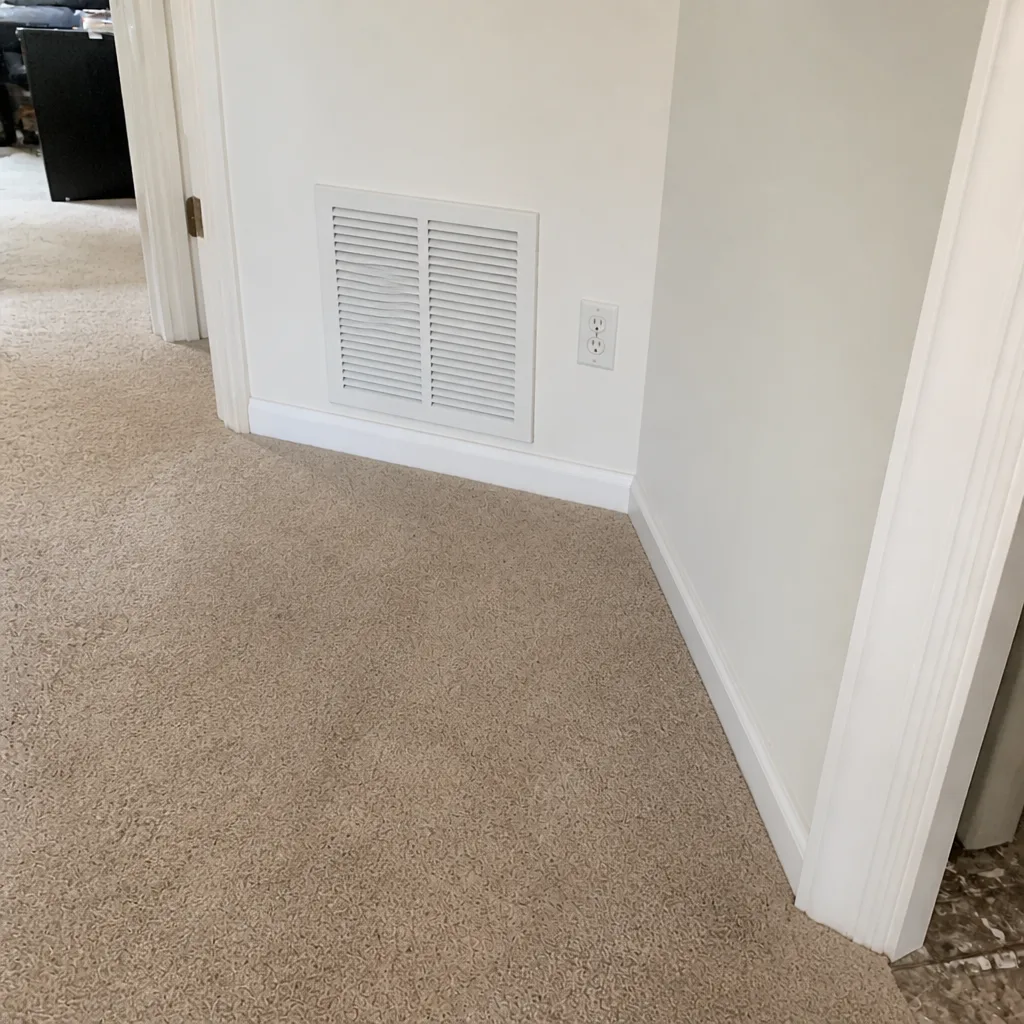 After
Frequently Asked Questions
Every three to five years for most homes, sooner after renovation work, pest activity, or visible debris in multiple rooms. Households with pets, anyone sensitive to pollen, and homes near busy corridors may need the shorter end of that range. The monthly checklist in this guide is what tells you whether you’re still inside the window or due for a cleaning.
MERV 8 to MERV 11 suits most homes here. That range captures pollen, dust, and larger particulate well without choking airflow in systems that were sized for a lower pressure drop. Higher ratings are worth considering only if the system was designed for them, and a deeper media cabinet gives you more room to raise the rating without sacrificing airflow.
The register inspection and airflow test in this guide do most of the work. Photograph every register monthly, shine a light into the duct behind the grille, and run the tissue-paper test at every supply twice a year. Visible debris in more than two or three rooms, or a musty smell that persists across two months, are the practical signals that it’s time for a professional cleaning.
A quote that’s dramatically lower than every other one is usually a different product, not a better price. Ask the company what equipment they’ll use, whether they’ll photograph the duct interior before and after, and whether the price is agreed before work starts. Here, we run Rotobrush and Nikro systems, agree one flat price per system before anything begins, and show you before-and-after photos of your own ducts. Call (844) 859-6986 for a free estimate.
Ask for before-and-after photos of the duct interior at each register, taken during the service. A legitimate cleaning produces visible evidence, and a technician with the right equipment can show it. Without photographic proof of what was in the duct before and what’s there after, you’re paying for a claim rather than a result.
Yes. A dryer can run normally with a significantly restricted vent, so the appliance spinning is not proof the line is clear. Check the outside flap while the dryer runs and watch for drying times creeping up. If the vent is restricted, have it cleaned before continuing to use the dryer.
The Bottom Line
The best-maintained duct systems aren’t the ones that get professionally cleaned most often. They’re the ones where the homeowner is watching the system between cleanings, photographing registers, testing airflow room by room, and logging what they find. That habit is what catches a weak branch before it becomes a collapsed run, a smell before it becomes a moisture problem, and a drying time creeping up before it becomes a fire risk. Run this checklist monthly where it’s quick, seasonally where it’s thorough, and write down what you find. When something falls outside the routine, call (844) 859-6986 for a free estimate. We answer 24/7. Fast dispatch from 7am to 7pm, Sunday through Friday, and a written flat price per system agreed before work starts. Duct Cleaning Vallejo handles cleaning, dryer vent service, and repair in one visit, using professional-grade equipment built for air quality, not just appearances. Your ducts. Your air.
Written by the team at Duct Cleaning Vallejo.